
No. 00 · A private cabinet · 9 pieces
PorcelainIndex
A catalogue of porcelain pieces with their descriptions, the stories of how they were made and the difficulties of making them.
- Pieces
- 9
- Craft steps
- 7
- Eras
- 9
- Terms
- 14
01 · How it works
Four drawers, one cabinet
PorcelainIndex is laid out like a collector's cabinet. Each drawer along the bottom of the screen opens a different way into porcelain.
- No. 1CATALOGUE
Nine pieces, nine stories
Open any card to read its description, the story of how it was made and the difficulties of making it.
- No. 2HISTORY
Three thousand years
Porcelain was born in China and remained its secret for centuries. Follow how the craft grew and travelled.
- No. 3CRAFT
From clay to kiln
Seven steps of making porcelain. Each shows what can go wrong and which pieces in the catalogue went through it.
- No. 4SAVED
Keep what you love
Tap the bookmark to save a piece. Recently viewed keeps your last 12 pieces for 90 days.
02 · The cabinet
Nine pieces, nine stories
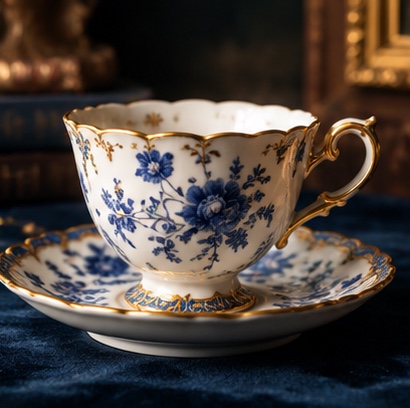
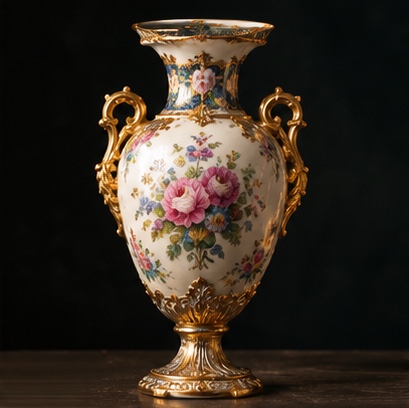
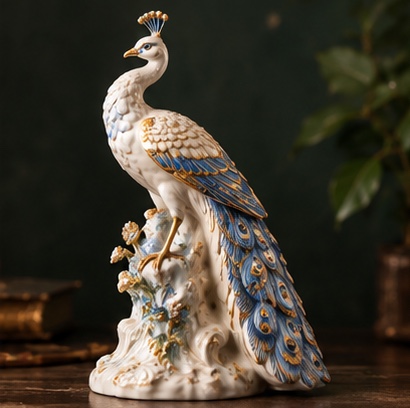
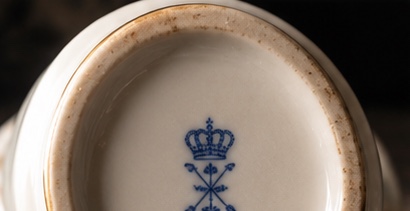
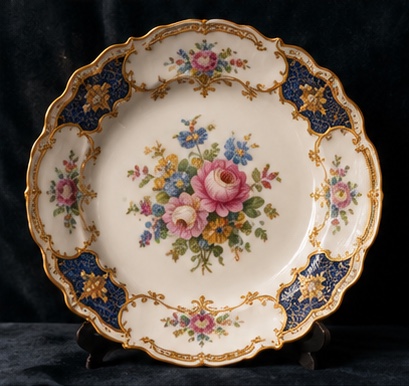
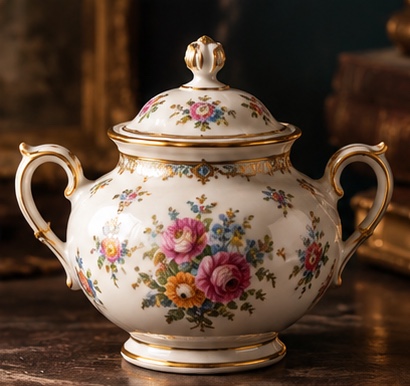
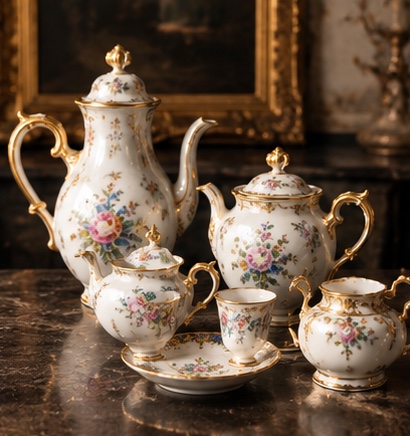
From a cobalt teacup to a peacock on rockwork. Every piece has its photograph, a museum label, the dated story of its making and the difficulties its makers had to overcome. Open a card to look closer.
The pieces in PorcelainIndex and the stories of their making were written for the app as illustrative examples of the craft. The history of porcelain follows widely documented events.
03 · Inside every card
Six chapters behind every photograph
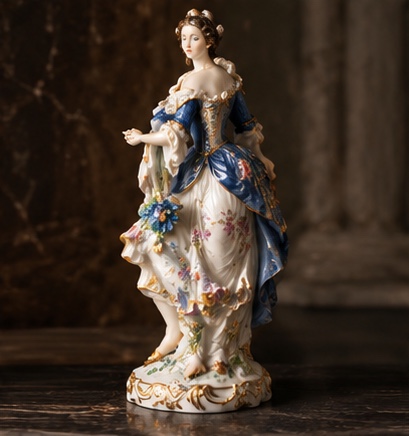
Each piece opens into the same six chapters, so you can compare a figurine with a sugar bowl, chapter by chapter. Here is the Lady with Flowers.
- 01
Description
What the piece is, how it was made and decorated, and what time has done to it.
“The figure is made in the style of the eighteenth century, which was fashionable again in the 1870s.”
- 02
History of Its Creation
A dated timeline that follows the piece from the first model to the home that kept it.
1869 A revival model1870 Lace from real fabric1870 Painting the face last1900s A dressing table companion
- 03
Difficulties of Making
The problems its makers had to overcome, each explained in a few lines.
Porcelain laceFaces decide the valueFingers and posies
- 04
Details
Type, period, region, material, technique and size, set out like a museum label.
Period c. 1870Region Central EuropeSize 26 cm high
- 05
Hardest Steps for This Piece
Which of the seven craft steps it depended on, and why each was difficult.
02 Forming06 High firing07 Enamels and gold
- 06
Terms
Specialist words, each one tap away from a short definition.
RococoOverglazeSlip casting
Search and filter
Search pieces, periods and techniques, or narrow the cabinet to tableware, vessels, figures or marks.
Gentle guidance
Short tips sit beside what they explain and never block the screen. Skip them all with one tap.
Saved and recent
Bookmark the pieces you love. Recently viewed remembers your last 12 pieces for 90 days.
Yours alone
No account, no ads, no tracking. What you save stays on your iPhone, and the catalogue works offline.
04 · From clay to kiln
Why porcelain is hard to make
Every piece passes through seven steps, and each can ruin all the work before it. Choose a step.
01Preparing the body
Porcelain is a mix of kaolin, a pure white clay, with feldspar or china stone and quartz. The materials are ground, washed and mixed with water into a smooth paste, then left to age.
Kaolin is not very plastic, so the paste is hard to shape. Any trace of iron fires as brown specks on the white surface.
What can be lostImpure batches are thrown away before shaping.
02Forming
Round shapes are thrown on the wheel or pressed over plaster moulds. Vases, spouts, handles and figures are cast from liquid slip in plaster moulds and joined by hand.
Walls must be even everywhere. A thicker spot dries and shrinks differently and pulls the piece out of shape later.
What can be lostUneven pieces are often discovered only after firing.
In the catalogue
03Drying
Pieces dry slowly for days or weeks in still air. They lose water and begin to shrink.
If one part dries faster than another, especially handles and thin edges, cracks open at the joins.
What can be lostCracked pieces can be recycled as clay while still unfired.
In the catalogue
04First firing
A soft first firing at around 900 degrees Celsius turns the dry clay into bisque, firm enough to handle, paint and glaze.
Bisque is still porous and fragile and must be moved with great care.
What can be lostSmall breakages are common at this stage.
05Underglaze painting and glazing
Cobalt blue and marks are painted onto the bisque, then the piece is dipped or sprayed with glaze.
Raw cobalt looks grey and only turns blue in the fire. Too much glaze runs, too little leaves dry, rough patches.
What can be lostBlurred blue or bare spots spoil the decoration for good.
In the catalogue
06High firing
The main firing reaches about 1300 to 1400 degrees Celsius. The body melts partly into glass, becomes white and translucent and fuses with the glaze.
At this heat porcelain softens and shrinks by about a sixth. Pieces can warp, slump, crack or stick to their supports.
What can be lostIn historic wood fired kilns a large share of each firing could be lost.
In the catalogue
07Enamels and gold
Overglaze colours and gold are painted on the glazed surface and fired again at lower temperatures, often several times. The gold is polished with agate or burnishing sand.
Each colour fires at its own temperature, and every extra firing risks cracks and blistered colour.
What can be lostA damaged piece at this stage loses all the work of the earlier steps.
In the catalogue
FFlaws of the fire
Warping
Softened porcelain sags or bends in the kiln. Plates rock on their foot, lids no longer fit and tall vases lean.
Firing cracks
Uneven drying or heating opens cracks, often at handles, feet and joins. They usually show as dark lines in the glaze.
Iron spots
Tiny particles of iron in the clay fire as brown or black specks on the white surface.
Glaze crawling
Glaze pulls away from the body during firing and leaves bare, rough patches.
Crazing
A fine network of cracks in the glaze, caused when glaze and body shrink by different amounts as they cool.
Blurred blue
Cobalt can spread into the glaze, softening fine lines and turning a crisp pattern hazy.
Worn gold
Gold fired at a low temperature is soft and rubs away on rims, handles and edges with use.
GGlossary
In the app, every term with a dotted underline opens its short definition. Try one.
Term
05 · The birth of a craft
Three thousand years of porcelain
Porcelain was born in China and remained its secret for centuries, until the recipe was found again in Saxony and spread across the world.
c. 1600 BCEToday
c. 1600 BCE to 200 CEChina
The first high fired wares
Potters in ancient China learn to fire stoneware at high temperatures and cover it with a glassy glaze. These hard, glazed wares are the first step on the long road toward porcelain.
200 to 907China
True porcelain appears
Between the Han and the Tang dynasties potters refine white clays and fire them hot enough to become hard, white and ringing. By the Tang dynasty fine white porcelain is made in northern China.
960 to 1279Jingdezhen, China
The porcelain city
Under the Song dynasty the town of Jingdezhen grows into the great centre of porcelain making, rich in kaolin and china stone. Thousands of potters, painters and kiln masters work in a chain of specialised tasks.
1271 to 1644China
Blue and white
In the Yuan and Ming dynasties cobalt blue painted under the glaze becomes the most famous style of all. Blue and white porcelain travels along trade routes to the Middle East, Africa and Asia.
1600sEurope
White gold
Merchant ships bring Chinese and later Japanese porcelain to Europe in great quantities. Kings and nobles collect it in special porcelain rooms, and European potters try for decades to discover its secret.
1708 to 1710Saxony
The secret found in Europe
In Saxony the scientist Ehrenfried Walther von Tschirnhaus and the alchemist Johann Friedrich Boettger succeed in making hard paste porcelain from kaolin. The first European porcelain manufactory opens at Meissen in 1710.
1700sEurope
Manufactories everywhere
The secret spreads with workers who change employers. Royal and private manufactories open across Europe, and in France and England potters develop soft paste porcelain from other ingredients.
around 1800England
Bone china
English potters add bone ash to the porcelain body. Bone china is white, translucent and strong, and it becomes the typical English porcelain.
1800s to todayWorldwide
From workshop to industry
Printing, slip casting and new kilns make porcelain affordable for every household. Hand painting and modelling survive in studios, and antique pieces become collected for their craft and history.
06 · Write to us
A question for the curator?
Spotted something in a story, have an idea for the cabinet, or need help with the app? Leave a note, or write to us directly.
inbox@gemscombosplit.click
Free on the App Store
Open the cabinet.
Nine pieces, seven steps from clay to kiln and three thousand years of history, in your pocket.